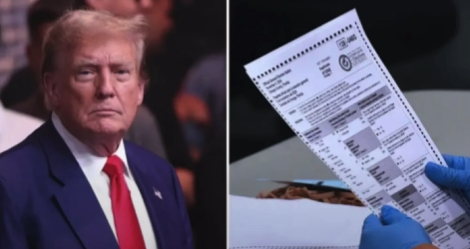

A federal appeals court has delivered a significant victory for election security advocates and Texas Republicans, ruling that the state can continue requiring voters to provide identification numbers that match state records when applying for mail-in ballots. The decision represents a major development in the ongoing national debate over voting rights, election integrity, and the balance between preventing fraud and ensuring ballot access for all eligible citizens.
The Court’s Decisive Ruling
The Fifth Circuit Court of Appeals issued its ruling on Monday, overturning a lower court decision that had previously struck down Texas’s identification matching requirement for mail-in voting applications. The three-judge panel’s decision was unambiguous in its support for the state’s position, finding that the ID verification system serves as a legitimate fraud prevention mechanism that does not violate federal civil rights protections.
Judge James Ho, who authored the majority opinion, emphasized the fundamental purpose behind the identification requirement: ensuring the integrity of the electoral process by confirming voter identity. “The law is obviously designed to confirm that every mail-in voter is indeed who he claims he is,” Ho wrote, articulating what supporters see as a common-sense approach to election security.
The ruling effectively reverses a November 2023 district court decision that had found the matching requirement to be immaterial to determining voter eligibility. This lower court had sided with arguments from the Biden administration and civil rights organizations that the system created unnecessary barriers to voting without providing meaningful security benefits.
However, the appeals court judges expressed “no difficulty” in concluding that the Texas law complies with federal requirements, suggesting a stark disagreement with the reasoning employed by the district court. The unanimous nature of the three-judge panel’s decision underscores the strength of their conviction that the identification matching system represents a reasonable and lawful approach to election administration.
Background: The Genesis of S.B. 1
The identification matching requirement at the center of this legal battle emerged as part of Senate Bill 1, a comprehensive election reform package passed by the Texas Legislature in 2021. This legislation was enacted during a period of intense national scrutiny of election procedures following the contentious 2020 presidential election, when questions about voting integrity and security dominated political discourse across the country.
S.B. 1 represented one of the most far-reaching election law overhauls in Texas history, addressing multiple aspects of the voting process from registration procedures to poll watching protocols. The mail-in ballot identification requirement was just one component of this broader legislative effort, but it quickly became one of the most controversial and legally challenged provisions.
The timing of S.B. 1’s passage reflected broader national trends, as Republican-controlled state legislatures across the country introduced and passed similar election security measures in response to concerns raised during and after the 2020 election cycle. Texas, as one of the largest and most politically significant states in the nation, became a testing ground for many of these new voting procedures and requirements.
The legislation’s supporters argued that the new requirements would help restore public confidence in election results by implementing additional safeguards against potential fraud. Critics, however, contended that the measures would disproportionately impact vulnerable populations and create unnecessary obstacles for eligible voters attempting to exercise their constitutional rights.