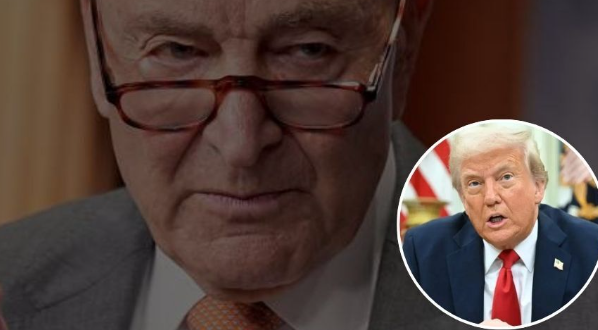

The Senate on Friday once again failed to advance a stopgap spending measure, leaving the federal government in a partial shutdown for another day and sending lawmakers home for the weekend with no agreement in sight.
The 54–44 vote fell short of the 60 votes needed to overcome a filibuster and move the bill forward. It marked the third failed attempt this week — and the fourth in the last two weeks — to pass a continuing resolution to reopen the government, Newsmax reported.
Two Democrats, Sens. Catherine Cortez Masto of Nevada and John Fetterman of Pennsylvania, and independent Sen. Angus King of Maine joined most Republicans in voting for the measure. The only Republican to oppose it was Sen. Rand Paul of Kentucky, who has consistently voted against short-term funding measures on principle.
With the defeat, the shutdown will now extend into the weekend. Senate Majority Leader John Thune, R-S.D., had warned his colleagues earlier in the day that if Democrats blocked the bill again, he would dismiss the chamber until Monday.
“Democrats just voted to continue to keep the government shutdown to give free healthcare to illegal aliens,” the White House wrote in a sharply worded post on X. “SHAME ON THEM.”
On Thursday, President Trump expressed enthusiasm about what he described as an “unprecedented opportunity” to reduce federal spending thanks to the shutdown, POLITICO reported. His administration announced $8 billion in cuts to green energy projects, all located in states that supported his 2024 opponent, Vice President Kamala Harris.
In addition, major infrastructure projects in New York have been placed on hold. The state, once Trump’s home, is also represented by top Democratic congressional leaders, adding to the political significance of the decision.
The failed vote underscored the stalemate that has gripped Congress since government funding expired at the beginning of the month. Republicans in both chambers have pushed for a straightforward stopgap bill to keep the government open while broader spending negotiations continue.
Democrats, however, have insisted on tying any deal to healthcare concessions, particularly provisions that would undo restrictions from the One Big Beautiful Bill Act that prevent certain illegal immigrants from receiving Medicaid payments.
That demand has become the central sticking point. Republicans have blasted it as an attempt to sneak Medicaid benefits for migrants into a larger funding debate, while Democrats have framed it as a matter of protecting healthcare for all residents.